Shifting Dynamics in Liquidity Provision Across UK Betting Exchanges During Peak Events
Written by Otto Griffin · Oct 14, 2026
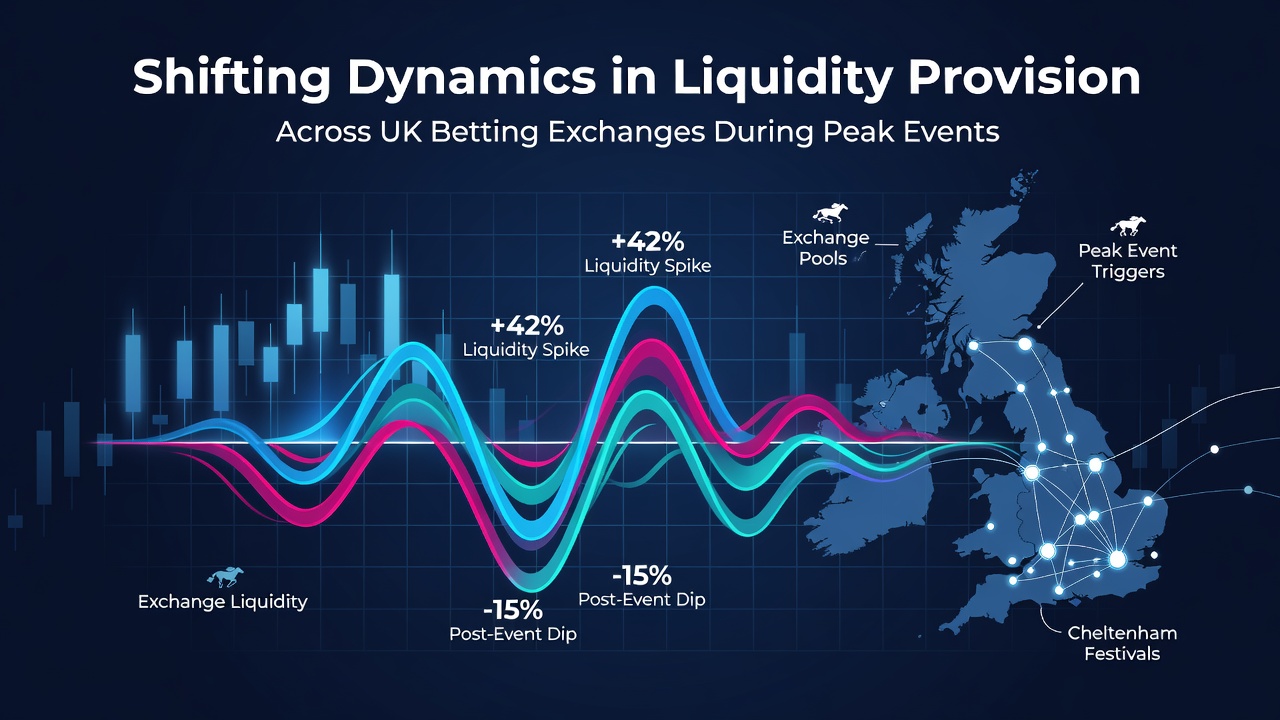
Shifting Dynamics in Liquidity Provision Across UK Betting Exchanges During Peak Events
Betting exchanges in the UK operate on a peer-to-peer model where liquidity determines how quickly and at what price bets can be matched, and this supply of available wagers and backers changes sharply when major sporting calendars reach their busiest periods. Data from industry reports indicate that events such as Premier League weekends, international rugby tournaments, and horse racing festivals draw significantly higher volumes of both recreational and professional participants, which in turn alters the balance between traditional backers and layers. Observers note that these spikes create temporary surpluses in certain markets while leaving others thinner, forcing participants to adjust strategies around timing and odds selection.
Core Mechanics of Liquidity on Exchanges
Liquidity provision relies on individuals and automated systems placing opposing bets that match in real time, and exchanges facilitate this through commission structures rather than fixed margins set by bookmakers. During quieter periods the depth remains modest because fewer users are active, yet peak events compress this cycle into hours or even minutes as simultaneous matches unfold across multiple sports. Research from the Australian Gambling Research Centre shows similar patterns in comparable jurisdictions where event-driven volume surges concentrate activity in high-profile outcomes while peripheral markets suffer from reduced participation.
Professional traders and syndicates often enter these windows with pre-loaded strategies that involve layering multiple outcomes to hedge exposure, which adds another layer of depth but can also withdraw suddenly if prices move against them. Those who have studied exchange data over several seasons point out that automated bots now account for a growing share of matched volume, executing thousands of small adjustments per minute to capture micro-movements in implied probabilities.
Event-Driven Volume Patterns in 2026
October 2026 brought a cluster of overlapping fixtures that included Champions League group stages alongside domestic football and rugby internationals, creating a sustained high-liquidity environment across several exchanges. Figures reveal that matched volumes in football markets rose by more than 40 percent compared with the same month in the previous year, according to aggregated exchange statistics released by platform operators. This increase coincided with improved API access for third-party tools, allowing smaller operators and individual traders to route orders more efficiently during the busiest trading hours.
Yet the distribution remained uneven because certain niche markets, such as player props or lower-division matches, continued to show thinner books even as headline fixtures attracted heavy traffic. Experts tracking these flows have observed that the presence of large syndicates can stabilise prices in core markets while leaving secondary ones vulnerable to sharp swings when a single large layer exits.

Technological and Regulatory Influences
Advances in order-matching algorithms and mobile connectivity have shortened the time between price updates, enabling participants to react faster when liquidity pools expand or contract. A report compiled by the Responsible Gambling Council of Canada highlights how similar technological upgrades in other regulated markets have increased overall matched volume without necessarily improving depth in every individual selection. In the UK context, exchanges have responded by introducing features such as conditional orders and enhanced cash-out options that allow users to lock in or exit positions mid-event, further shaping the available liquidity at any given moment.
Regulatory adjustments in neighbouring jurisdictions have also played a role, with operators noting that cross-border participation fluctuates depending on licensing clarity and tax treatment. Those monitoring October 2026 activity recorded brief dips in certain international markets when policy announcements from European authorities created temporary uncertainty, prompting some professional layers to reduce exposure until clarity emerged.
Participant Behaviour and Market Adaptation
Recreational users tend to cluster around popular outcomes during peak windows, creating temporary imbalances that experienced traders exploit by providing liquidity on the opposite side. Studies conducted by the Nevada Gaming Control Board on comparable exchange-style platforms indicate that this pattern produces measurable differences in margin capture between high-volume and low-volume selections. Over time, exchanges have introduced incentives such as reduced commission rates for high-frequency providers to encourage consistent depth across a wider range of markets.
Case examples from past festivals show that when a major upset occurs early in a tournament, liquidity can migrate rapidly toward remaining fixtures as participants reallocate funds, leaving earlier markets to settle with reduced activity. This migration effect becomes more pronounced when multiple sports overlap, forcing traders to prioritise which events receive the bulk of their capital and attention.
Conclusion
Liquidity provision on UK betting exchanges continues to evolve in response to technological tools, overlapping event calendars, and shifts in participant composition, with October 2026 serving as a recent illustration of how volume surges concentrate in headline markets while secondary selections require deliberate support. Data from multiple regulatory and research bodies demonstrate that these dynamics remain measurable through matched-volume statistics and order-book depth, offering a factual basis for understanding how exchanges function under sustained pressure. As participation patterns and platform features develop further, the same underlying principles of matching supply adn demand will determine outcomes across future peak periods.